
The fabric and finish you choose for your blinds matter just as much as the style. A fabric that works beautifully in a bedroom might be completely unsuitable for a bathroom or conservatory. Getting the choice right means thinking about how the room is used, the amount of natural light, privacy, temperature and, importantly, moisture.
When choosing blinds, it's tempting to start with colour and design. But there's a little more to consider if you want them to look good and perform well for years to come.
At Stripe Interiors, we believe choosing the right blind starts with understanding the room it's going into.
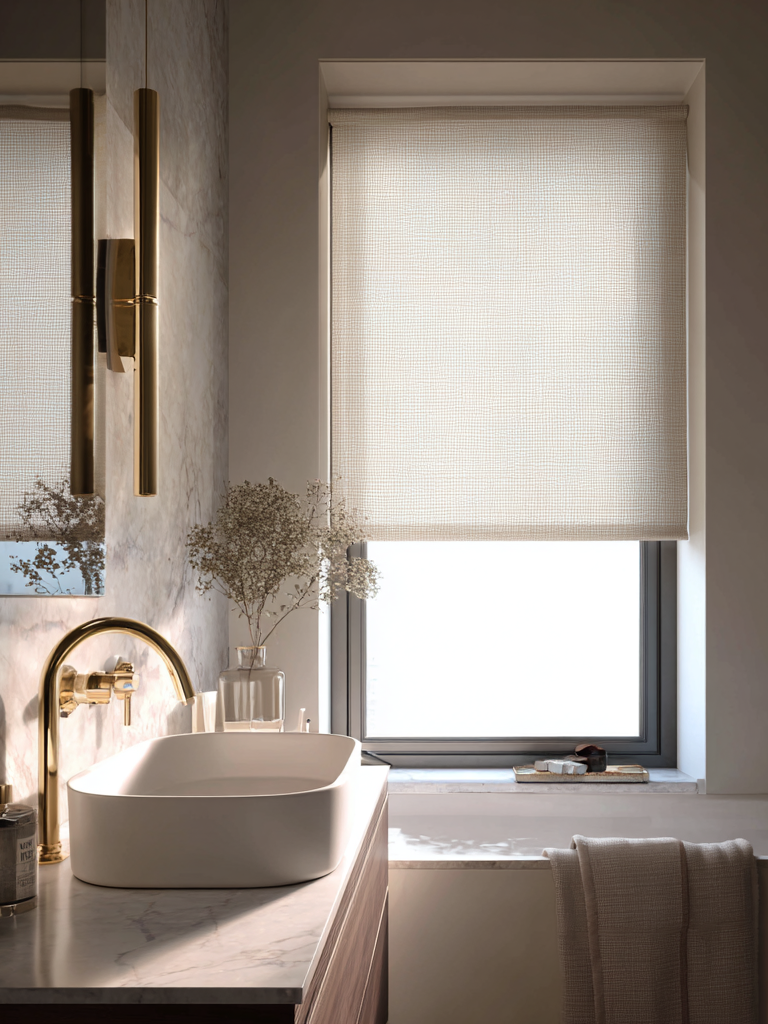
Bathroom roller blind
It's about more than choosing a colour
Every room has its own conditions, and your window coverings need to work with them.
Think about:
Moisture and condensation: Bathrooms, kitchens and utility rooms can have higher humidity levels, making fabric suitability particularly important.
Heat and temperature: Conservatories and south-facing rooms can become extremely hot in summer and cold in winter.
Light control: Do you need to soften strong sunlight, reduce glare, create privacy or block out light completely?
Privacy: Ground-floor windows, overlooked rooms and street-facing properties may need a different approach.
Insulation: Certain blind fabrics and constructions can help improve thermal comfort and reduce heat loss.
The prettiest fabric in the sample book isn't necessarily the best choice for every window.

Office Blinds
Matching blind fabrics and finishes to different rooms
Bathrooms and shower rooms
Moisture is the main consideration here. Steam and condensation can affect certain fabrics and their backing over time, particularly where ventilation is limited.
Look for waterproof or specifically moisture-resistant materials that are easy to wipe clean.
Consider:
Waterproof roller blind fabrics.
Aluminium Venetian blinds.
Faux wood Venetian blinds.
Waterproof shutters.
Speciality fabrics.
Standard decorative fabrics and real wood are generally better kept away from areas with regular moisture exposure.
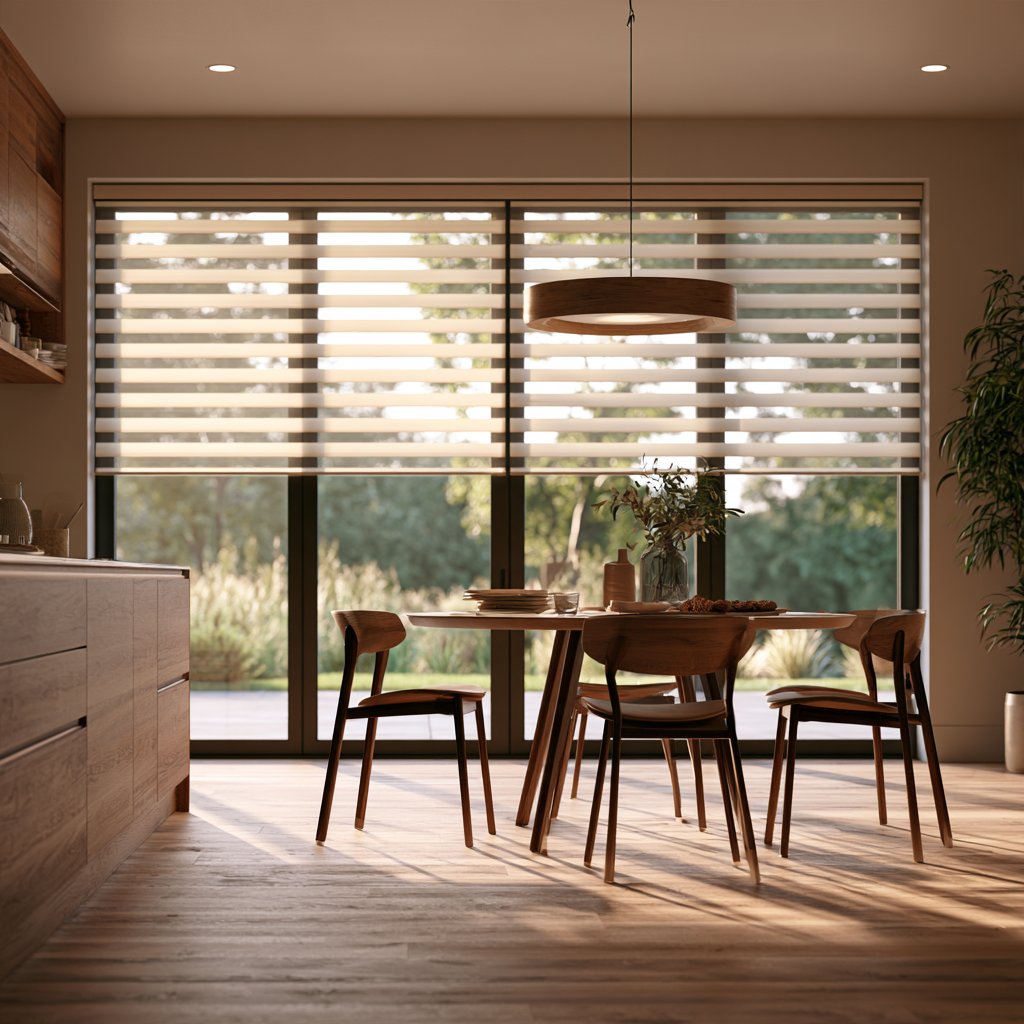
Kitchens and utility rooms
Kitchens need practical window coverings that can cope with changes in temperature, cooking steam and everyday splashes.
Easy-clean finishes are often a sensible choice, particularly around sinks and worktops.
Consider:
Wipe-clean roller blind fabrics.
Aluminium Venetian blinds.
Faux wood Venetian blinds.
Moisture-resistant vertical blind fabrics.
The position of the window in relation to cooking areas and sinks will also influence the best choice.
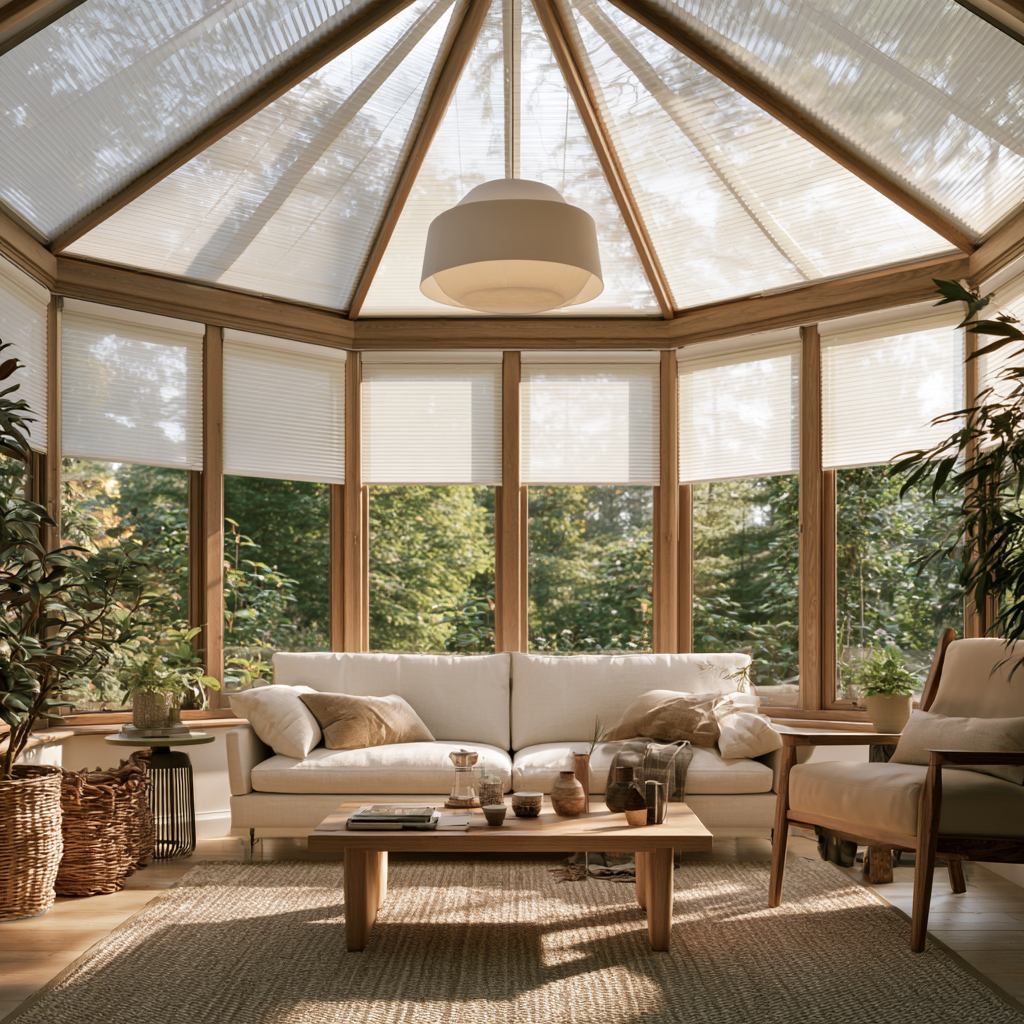
Pleated Blinds
Conservatories and garden rooms
These rooms can be particularly challenging because of their large areas of glazing and changing temperatures.
In summer, strong sunlight can create excessive heat and glare. In winter, cold glass and condensation can become an issue.
The right blind can make a considerable difference to how comfortable the room feels.
Options include:
Solar-control roller blind fabrics.
Moisture-resistant vertical blinds.
Cellular or honeycomb blinds for additional insulation.
Suitable Perfect Fit or INTU systems.
Shutters, where the material and finish are appropriate.
For particularly sunny conservatories, external shading or awnings may also be worth considering, as they help prevent the sun's heat reaching the glass in the first place.
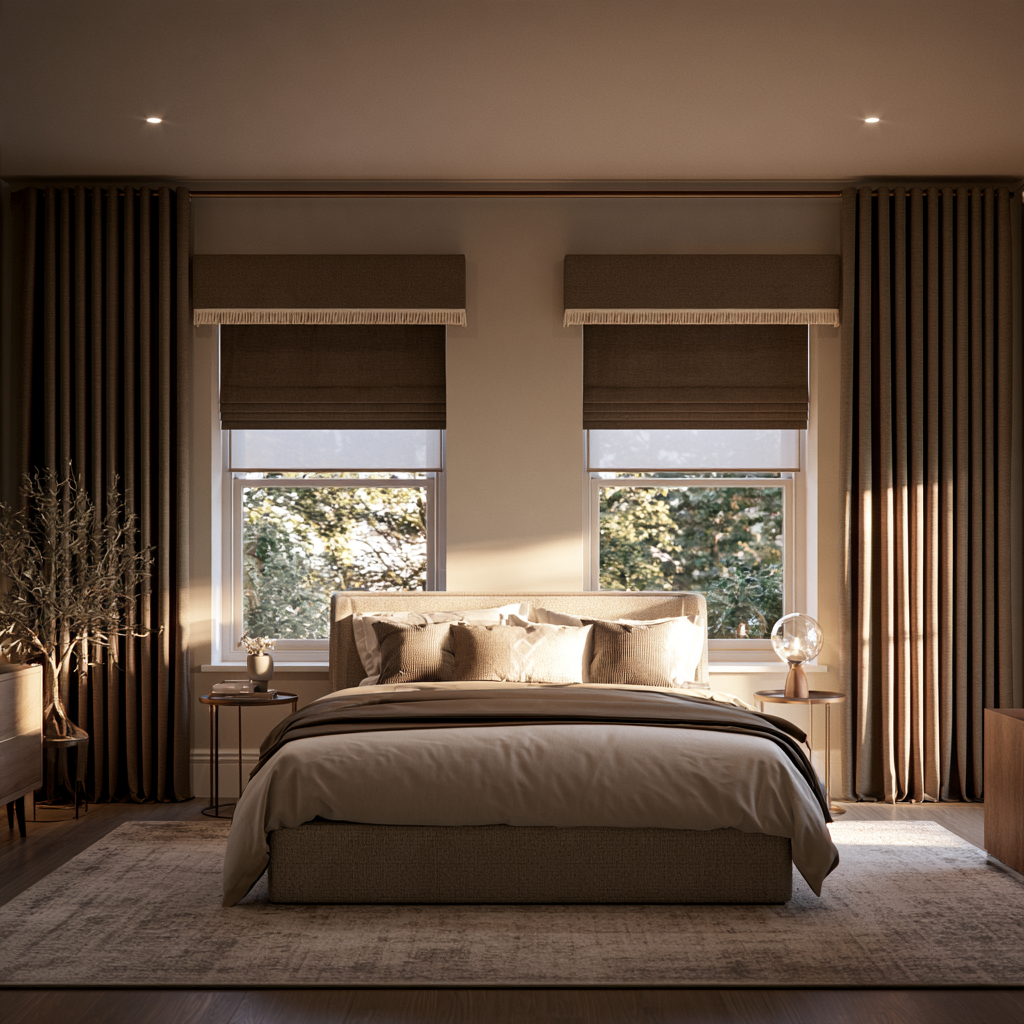
Roman blind, voile blind, dress curtains.
Bedrooms
Here, light control and privacy are usually top priorities.
Blackout fabrics are popular for bedrooms, particularly where street lighting or early morning sunshine is a problem. However, blackout doesn't always mean complete darkness, as light can still enter around the edges of a blind. Side channels are worth considering alongside layering.
Consider:
Blackout roller blinds.
Blackout cellular blinds.
Roman blinds in a decorative face fabric with blackout lining/interlining.
Layering a blind with curtains for additional softness and light control.
Living rooms and dining rooms
These rooms offer more flexibility, so the choice can be driven by the look you want to achieve as well as practical requirements.
Do you want to filter daylight, protect furnishings from strong sunlight, maintain privacy or create a softer, more decorative finish?
Options include:
Sheer or light-filtering roller blinds.
Roman blinds in decorative fabrics.
Venetian blinds for adjustable light control
Cellular blinds.
Layered blinds and curtains.
Shutters
The fabric, texture and finish can make a real difference to the overall feel of the room.
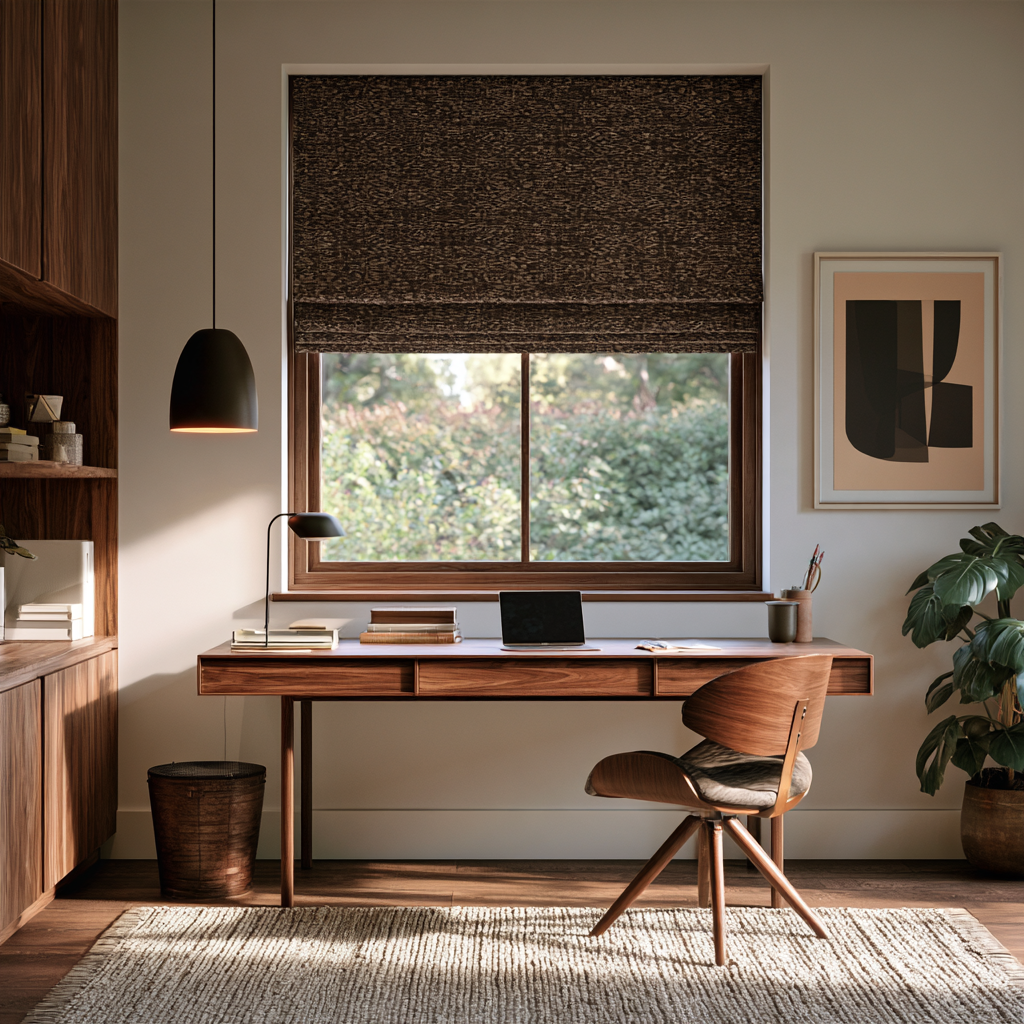
Home offices and workspaces
A home office needs a little more thought than simply choosing a blind that looks good.
If you spend hours working at a computer, managing daylight and glare is particularly important. Strong sunlight falling directly onto a screen can make working uncomfortable, while a room that becomes too hot in the afternoon can quickly become unpleasant.
The aim is to filter natural light without making the room unnecessarily dark.
Consider:
Light-filtering roller blinds: Help soften incoming daylight and reduce glare on computer screens.
Screen or solar-control fabrics: Available in different openness factors, allowing you to manage how much light and heat passes through the fabric while retaining some view outside.
Thermal or cellular blinds: Can help regulate room temperature, particularly in rooms that become too hot in summer or lose heat in winter.
Blackout blinds: Useful where stronger light control is needed, although they may be more than you need for everyday office use.
Window direction makes a difference too. A south- or west-facing office may need more attention to solar control than a north-facing room.
It's worth considering where your desk and screens are positioned in relation to the window before choosing your blind. The right fabric can make a real difference to comfort and concentration throughout the working day.
Understanding the different blind fabrics and finishes
Not all blind fabrics are made to do the same job. Here are some of the main options to consider.
Waterproof/Wipe Clean roller fabrics - usually PVC. Check the mechanisms are suitable too.
Screen - PVC with different shading levels 5%, 10% are popular. Also available as a fully blackout option if you like the textured look.
Solar-reflective fabrics -
Conservatories and sunny roomsHelps manage glare and solar gain
Blackout fabrics - consider light gaps around the blinds
Dim-out fabrics - reduce light without completely blocking the light.
Sheer and voile fabrics - these wide-width fabrics are perfect for bi-fold doors and layering. They soften a space and add privacy.
Cellular blinds - best for a modern look, conservatories and colder rooms
Aluminium Venetian blinds - ideal for kitchens and bathrooms where rust and moisture could be an issue, lightweight and wipeable.
Faux wood Venetian blinds - kitchens, bathrooms and utility rooms, a practical alternative to shutters but consider the stack in up position. Heavy, sizes are limited due to this.
Decorative Roman blind fabrics - best for choice of colours, patterns and textures
Always check the manufacturer's guidance on the suitability and care requirements of individual fabrics.
Why the finish matters too
Once you've found a suitable fabric, think about the finish.
A matt finish will give a different look from a subtle sheen. Textured fabrics can add interest without introducing a strong pattern, while a plain fabric can provide a quieter backdrop to an otherwise busy room.
Colour also plays an important part.
A pale fabric can help maintain a light, airy feel, while a deeper shade may provide a stronger visual feature. If the window receives strong sunlight, it's worth considering how the fabric will look in both natural and artificial light.
This is why we always recommend looking at fabric samples in the room itself. Colours can look surprisingly different depending on the direction of the window, the light and the surrounding decoration as well as time of day as the sun does move around!
The importance of getting the advice right
Choosing blinds shouldn't be a case of picking a style, choosing a colour and hoping for the best.
The window, the room and the way you use it all matter.
At Stripe Interiors, we look at the practical requirements alongside the appearance. We want your blinds to work properly, complement your furnishings and be suitable for the conditions they'll live in.
Sometimes that means suggesting a different fabric or finish from the one you initially had in mind. It's not about limiting your choices; it's about helping you make the right one.
Our advice? Choose the style for the room first, then find the finish you love.
Frequently Asked Questions
What is the best blind fabric for a bathroom?
Waterproof or specifically moisture-resistant fabrics are generally the best choice. Aluminium and faux wood Venetian blinds are also practical options. Always check the manufacturer's recommendations for the particular room.
Are all roller blind fabrics suitable for kitchens?
No. Some standard fabrics may not cope well with regular moisture, steam or splashes. Look for wipe-clean or moisture-resistant options where appropriate.
What blind fabric is best for a conservatory?
This depends on whether your main concern is heat, glare, insulation or privacy. Solar-control fabrics can help with sunlight, while cellular blinds may offer additional insulation. The room's orientation and glazing should also be considered.
What is the difference between blackout and dim-out fabric?
Blackout fabrics are designed to block light passing through the fabric itself. Dim-out fabrics reduce incoming light but still allow some to pass through. Neither necessarily prevents light entering around the edges of a blind.
Can I use Roman blinds in a kitchen or bathroom?
Roman blinds are made using decorative furnishing fabrics and are generally better suited to drier rooms. They aren't usually the first choice for areas exposed to regular steam and condensation.
Should I choose my blind fabric before decorating?
It's worth considering your window treatments early in the decorating process. This gives you the opportunity to coordinate colours, finishes and practical requirements rather than treating blinds as an afterthought.
Do I need to see fabric samples before ordering?
Absolutely. A fabric can look quite different in your own home compared with a sample book or online photograph. Viewing samples against your walls, flooring and furnishings in natural light is always worthwhile.
