
The Principles Behind a Beautiful Interior

Mid-Century Vibe
Ask ten people what makes a room beautiful and you'll get ten different answers, and every one of them will be right. But after years of measuring windows, fitting curtains and standing in hundreds of finished rooms across Hertfordshire and North London, we've noticed the same handful of things at play again and again in the rooms whose aesthetic genuinely works. Not rules exactly, more like habits worth understanding before you start making decisions.
1. Balance and Proportion
The first thing we look at when we walk into a room isn't the sofa or the paint colour, it's whether things are the right size for the space they're in. A generous curtain in a small room can feel like exactly the right amount of luxury, or it can swallow the space whole, and the difference usually comes down to how much wall is either side of the window and how the fabric is made.
The same goes for everything else in a room. A large piece of furniture in a compact space can feel overwhelming if nothing else in the room is scaled to match it. A delicate, spindly chair in a grand room can look lost rather than elegant. Proportion isn't about following a formula, it's about looking at what's already there and making sure new pieces earn their place alongside it.
The Rule of Thirds
One genuinely useful trick, borrowed from photography, is to think of a wall or a window in thirds rather than halves. It's part of why curtains hung high and wide, well beyond the window frame, tend to look more considered than curtains fitted tightly to the glass. The eye reads the extra fabric as intentional rather than accidental, and the whole window feels more generous as a result.
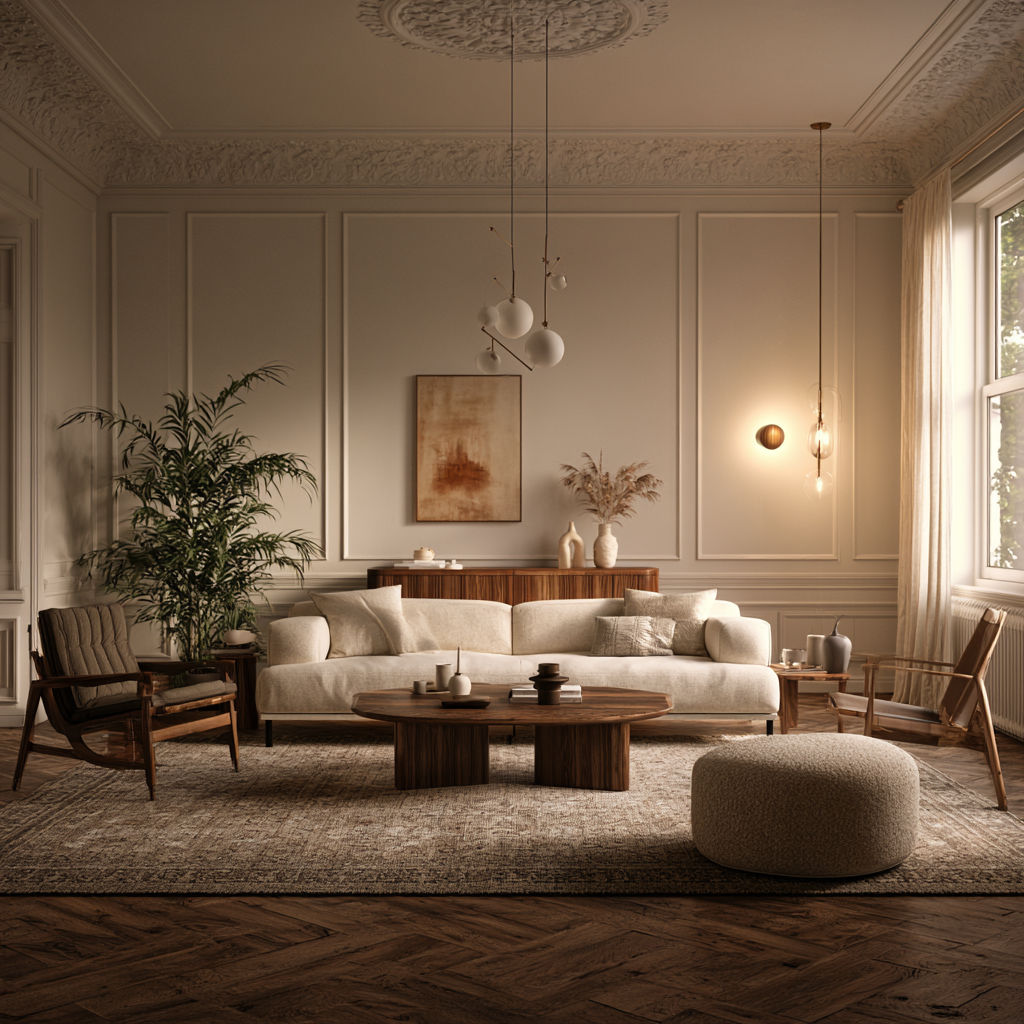
Panelling Detail
2. Colour, Used with Intention
Colour does more work in a room than almost anything else, and it's rarely about following a trend. We've fitted curtains in the same neutral linen in two completely different homes and watched them read as calm in one and flat in the other, simply because of what surrounded them.
Soft neutrals, warm greys, creams, muted stone, tend to give a room longevity. Bolder choices, a deep blue, an emerald, a rich terracotta, bring energy but need the rest of the room to support them rather than compete. Neither is right or wrong. What matters is whether the colour was chosen deliberately for that specific room, or simply because it looked good on a swatch.
Layering Tones
Rather than picking one shade and repeating it everywhere, the rooms that feel richest usually layer several tones of the same colour family. A navy cushion, a paler blue throw, a hint of teal in the curtain lining. It reads as considered rather than matched, which is exactly the effect you want.
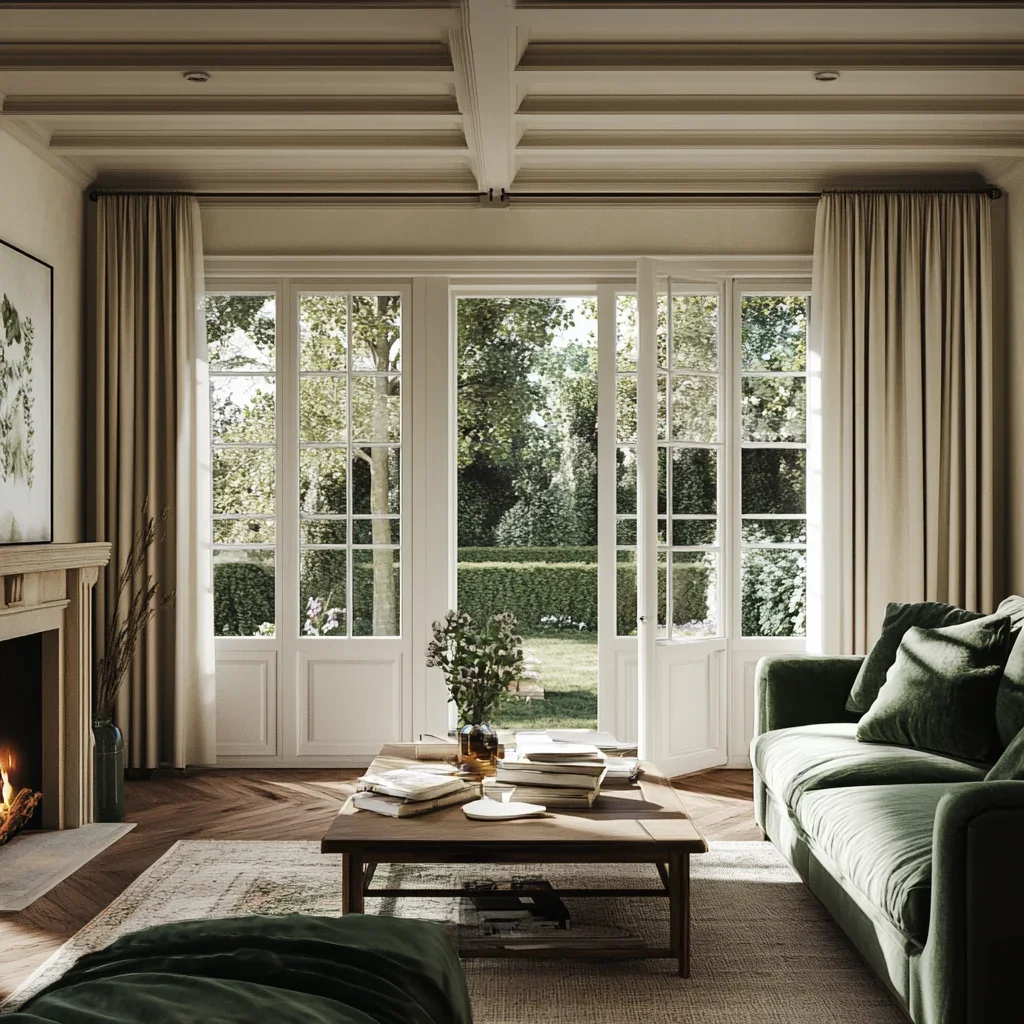
Tonal Layers
3. Texture
A room built entirely from smooth, similar surfaces can feel flat no matter how good the colour scheme is. This is something we think about constantly in our own work, because fabric is fundamentally a texture decision as much as a colour one.
A heavily interlined curtain against a polished wood floor. A boucle cushion against a linen sofa. A bobble-edge trim against a plain blackout lining. These contrasts are what make a room feel touchable rather than just visible, and they're often the difference between a room that photographs well and one that actually feels good to be in.
Layering Beyond Fabric
The same principle extends to lighting and layout. A room lit only by an overhead pendant reads very differently to one with a table lamp, a wall light and a curtain that softens the light coming through the window during the day. Layering isn't just a fabric habit, it's a whole-room one.

Art piece as inspiration for room decor with neutral curtains
4. Restraint
Not every surface needs to be dressed. Not every wall needs art. Some of the best rooms we've worked in have as much presence in what was left out as in what was added.
This matters practically too. A pattern that would feel busy across an entire room can feel exactly right confined to one generous curtain, precisely because it isn't fighting for attention with six other patterns in the same space. Fewer, better decisions tend to outlast more, average ones.
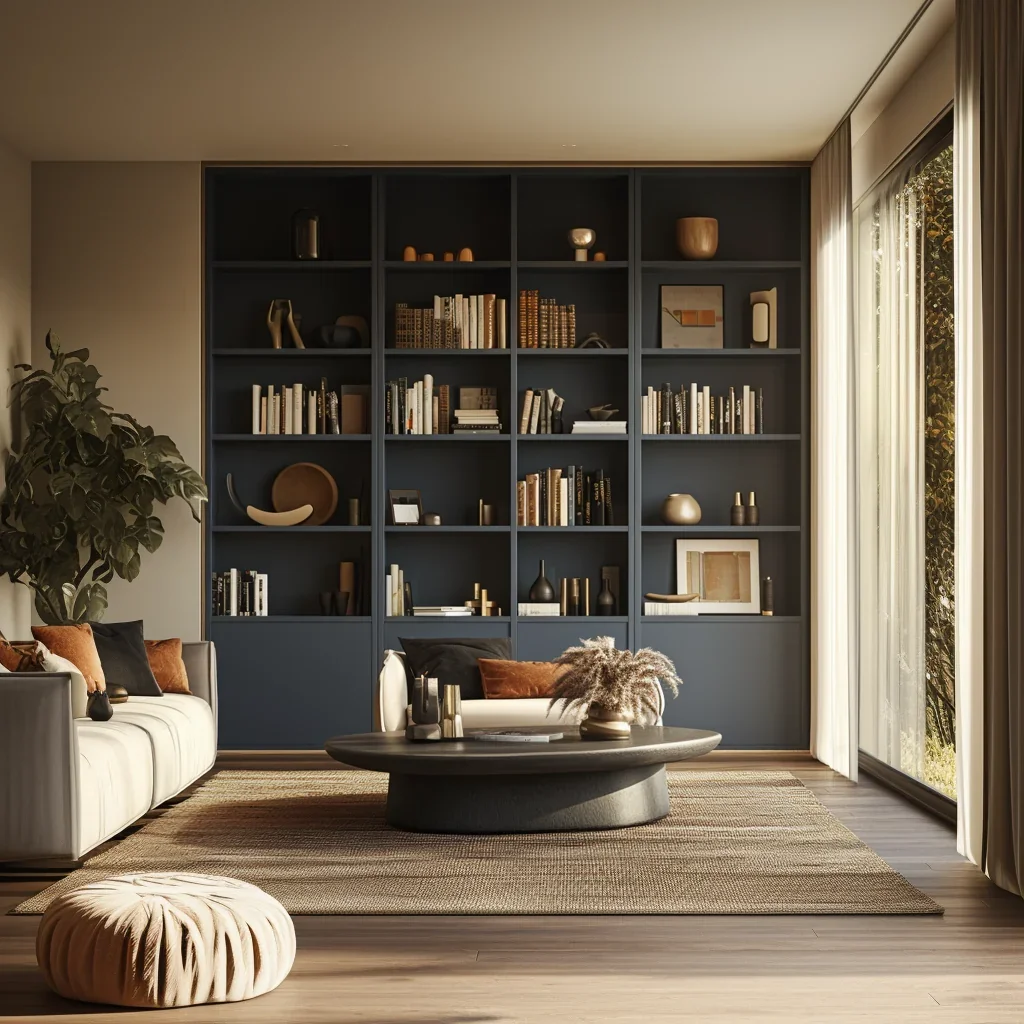
Display Collections
5. Personal Detail
The rooms that stay interesting years after they're finished are usually the ones with something in them that couldn't have come from a showroom. A fabric chosen because it reminded a client of a house they grew up in. A trim colour pulled from a painting they already owned.
These details rarely show up on a mood board, because they can't be sourced from a trend report, only from a proper conversation about how someone actually wants to live. That's usually where the best decisions in a room come from: not the fabric that's currently everywhere, but the one that means something to the person who has to live with it. It's also why the same brief, given to two different clients, never ends up looking the same twice.

Tonal Layers
6. Built to Last
A beautiful room isn't just one that looks right on the day it's finished. It's one that still looks right in five years, when trends have moved on and the fabric has been lived with properly. This is partly a material question, well-made pieces and honest fabrics age better than anything chasing a fast trend, and partly a design one: rooms built around a considered, personal palette tend to date far more slowly than rooms built around whatever's fashionable this season.
This is partly about the fabric itself. A well-woven linen or a properly finished wool will hang, wear and fade differently to something thinner chosen purely on price, and the difference only becomes obvious after a few years of daylight and daily use, by which point it's too late to change your mind cheaply. Fibre content, weight and construction matter as much as the colour or the pattern, even though they're the least glamorous part of the decision.
It's partly a design question too: rooms built around a considered, personal palette tend to date far more slowly than rooms built around whatever's fashionable this season. But quality is what actually makes something last. A well-made, properly interlined curtain can easily see thirty years of daily use, which is exactly why it's worth being certain you'll still love it long after the trend that inspired it has moved on.
Making It Yours
None of this is a formula, and we'd be the first to say that some of the best rooms we've worked on broke half these habits deliberately and beautifully. What matters is that the decisions were made on purpose, not by accident. If you're working through what any of this looks like for your own home, we're always happy to talk it through on a home visit.
