
Remember when decorating inspiration meant hours scrolling through Pinterest, saving pictures of beautiful rooms and wondering whether something similar would work in your own home?
Well, things have moved on.
With AI tools such as ChatGPT, Claude, Gemini and others, you can now upload a photograph of your own room and start experimenting. Change the curtains, try a different blind, explore colour combinations or completely rethink the look of your space. All without moving a single piece of furniture.
And some of the results are surprisingly good!
We're already seeing clients send us AI-generated images of their rooms, showing us what they'd like to achieve. We think it's a brilliant way to explore ideas and start a conversation.
But there's a difference between creating a lovely picture and making it work in real life. That's where our experience with fabrics, curtains, blinds and shutters comes in.
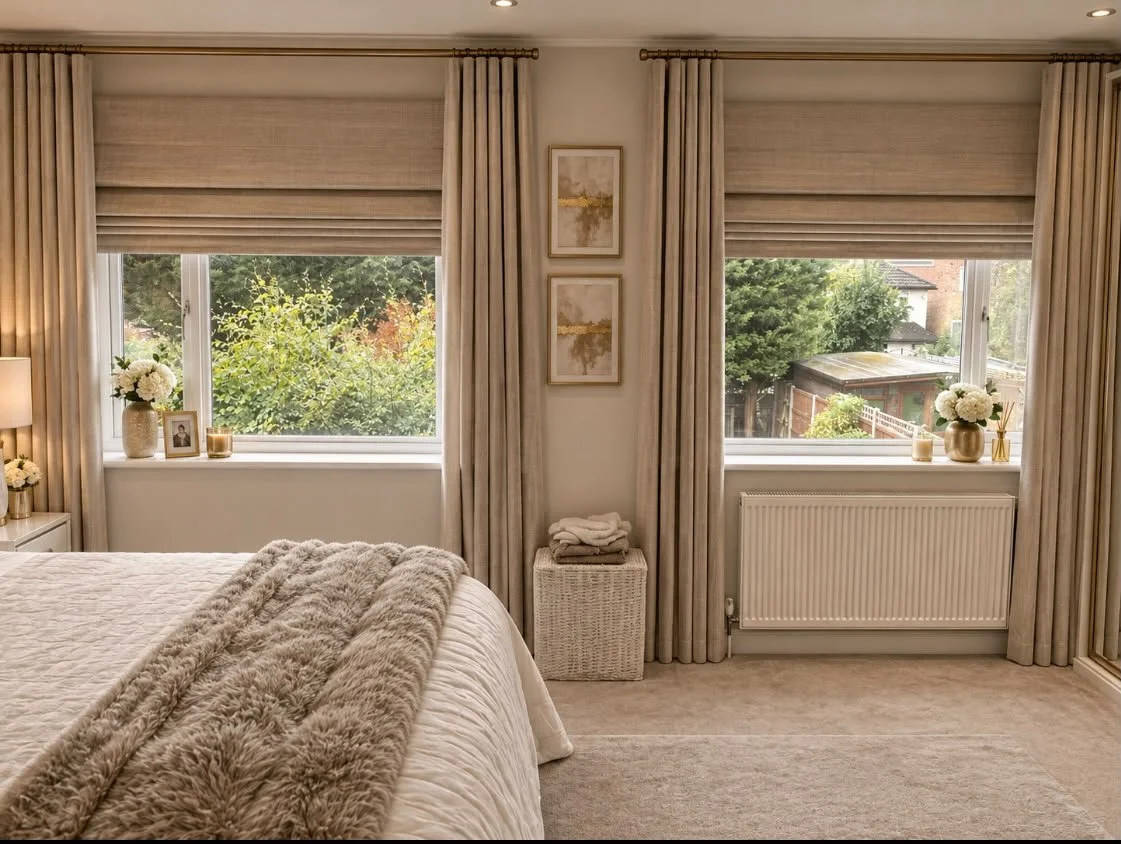
Client AI Visula
Your room, reimagined
One of the most useful things about AI is that you don't have to start with someone else's home as your inspiration. You can start with your own.
Upload a photograph of your sitting room, bedroom or kitchen and ask AI to show you what it might look like with different curtains, a Roman blind, shutters or a completely different colour palette.
You can experiment with:
Different curtain styles and headings.
Patterned fabrics against plain walls.
Colours and textures to complement existing furniture.
Layered window treatments, combining curtains and blinds.
Different ways to dress an awkward or unusually shaped window.
Soft furnishings, cushions and upholstery to bring everything together.
You can even ask for several alternatives, comparing a relaxed, understated look with something more colourful or dramatic.
It's a useful way to explore what you like, particularly if you find it difficult to picture how something might look in your own home.
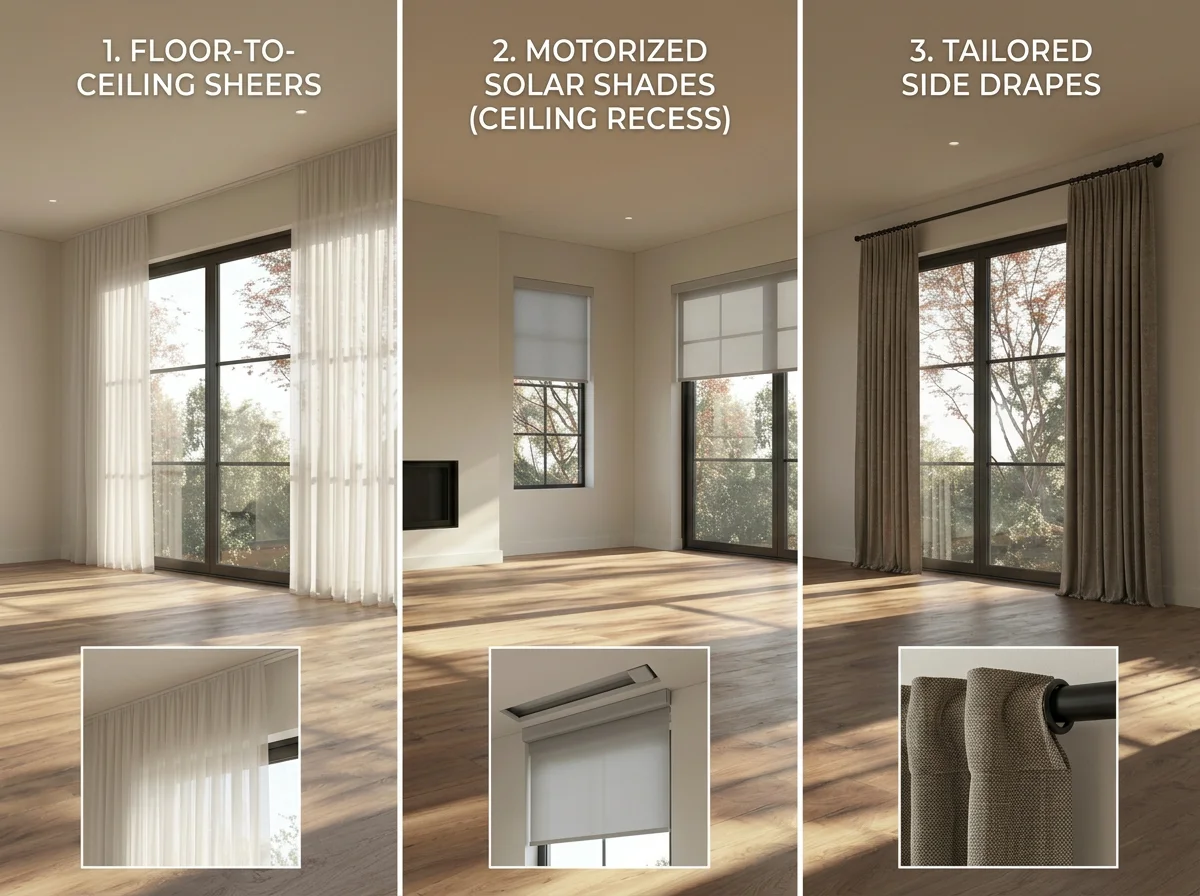
Gemini Image suggestions
When a picture looks lovely, but doesn't quite work
Here's where things get interesting.
AI is very good at creating images that look convincing. But convincing and technically correct aren't necessarily the same thing.
We've seen visualisations where a wave-headed curtain is shown hanging from a traditional curtain pole with rings. It might look perfectly plausible in the picture, but that's not how a wave curtain works. Wave curtains need a specific track system, with carriers and carefully calculated spacing to create those lovely, regular folds. There are ways to hang one from a pole with rings but you are talking complicated making and there are easier ways to make and save on your budget.
And that's just one example.
AI might show:
Curtains stacking neatly to the sides of a window where there isn't enough space for the fabric.
Roman blinds fitted into recesses without allowing for window handles or other obstructions.
Beautifully dressed windows without considering how the windows actually open.
Fabrics falling in a way that isn't possible with the chosen heading or construction.
Layered blinds and curtains that look wonderful but would interfere with each other when operated.
Sometimes it even makes a few architectural adjustments of its own along the way!
The technology is creating an image that looks right visually, rather than necessarily understanding how something needs to be measured, made and fitted.
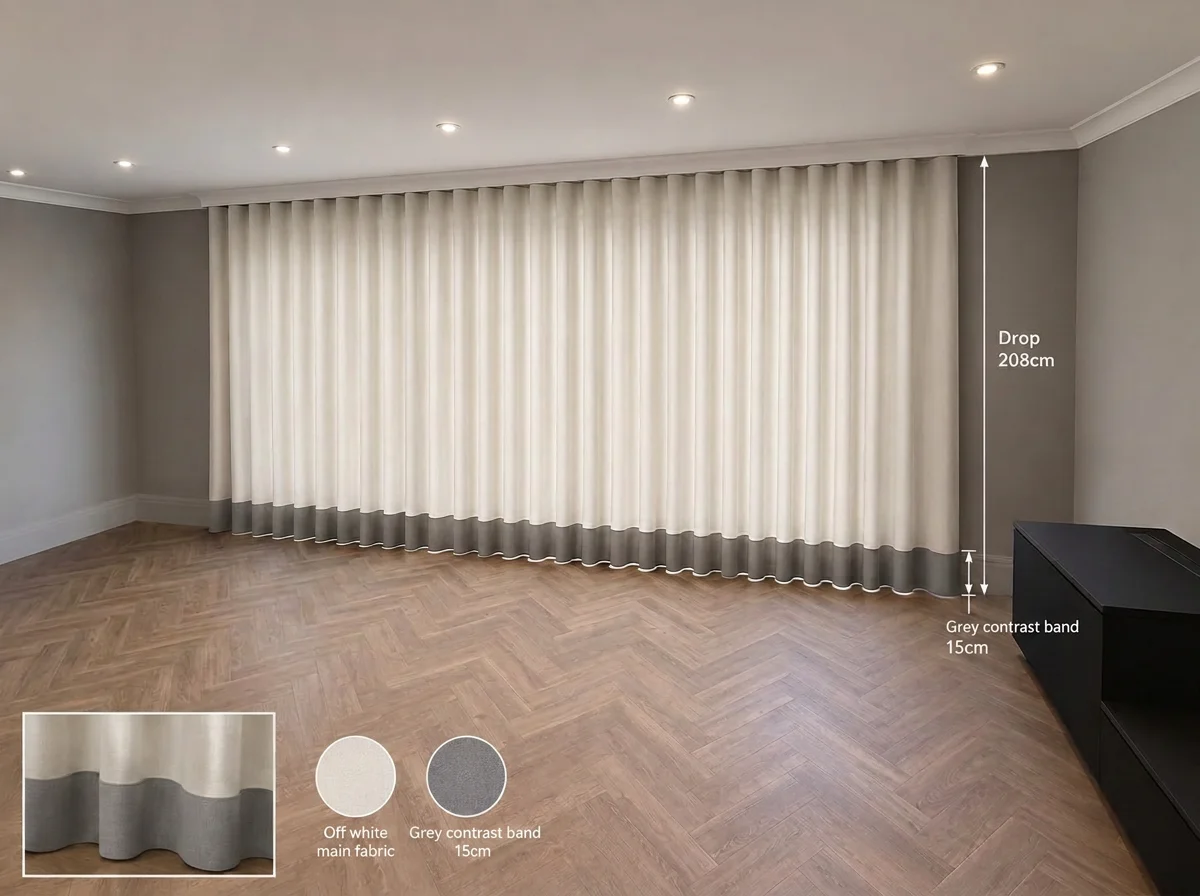
AI Visualisation
Turning inspiration into something that works
This is where we come in.
An AI image can be a brilliant starting point, but before choosing fabrics or placing an order, there are practical details to consider.
When we're looking at a window, we're thinking about much more than the fabric. We're considering the width and height, available fixing space, how much room there is for curtains to stack back, which heading will work best and whether the chosen treatment will do the job it needs to do.
A Roman blind, for example, needs sufficient space above the window to stack neatly when raised. A wave curtain needs the right track and enough room to form its characteristic folds. And if you're layering curtains with blinds, both treatments need to operate independently without getting in each other's way.
Then there's the fabric itself. Weight, texture, pattern repeat, lining and interlining all influence how the finished curtain or blind will look and perform.
These are the details that an attractive AI image doesn't necessarily account for.
Sometimes we'll be able to achieve exactly the look you've shown us. Other times we'll suggest a different heading, a more suitable fabric or a slight adjustment to the original idea. The aim is to capture what you loved about the image, while making sure the finished result works beautifully in your home.
Don't forget the fabrics!
One thing AI can't quite replicate is the experience of seeing and feeling actual fabrics.
A photograph can give you an idea of colour and pattern, but it can't tell you how a linen feels, how a velvet catches the light or how a particular fabric will drape when made into curtains.
Nor can it guarantee an accurate representation of a fabric's colour on your screen.
That's why we still believe in bringing samples into your home. Seeing fabrics against your own walls, flooring and furniture, in your own light, is an important part of making the right decision.
An AI-generated image might point you in the right direction, but the actual fabric needs to earn its place.
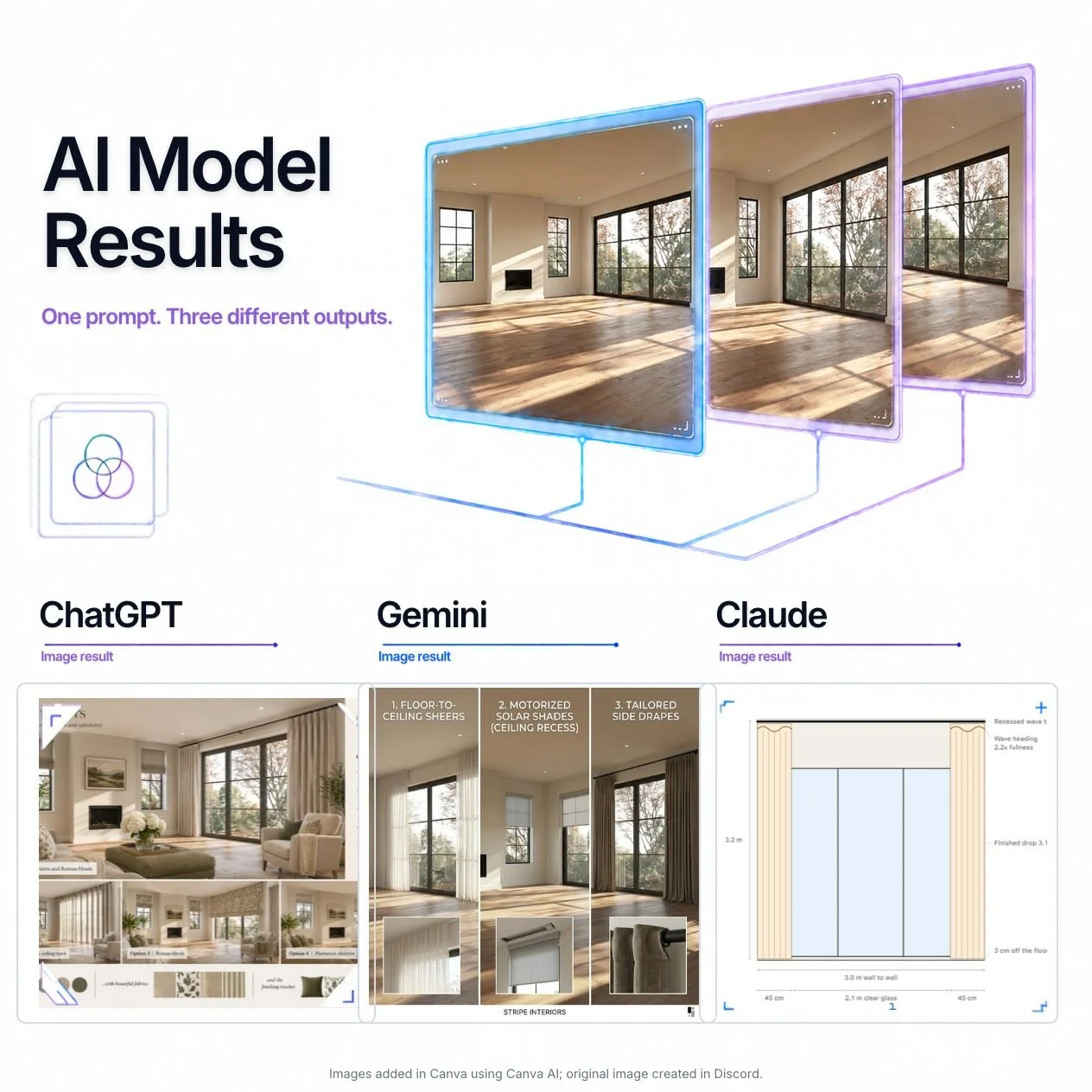
So, go on, have a play!
We're certainly not suggesting you need to become an expert in AI, but it's worth having a go.
If you've been thinking about new curtains, blinds or shutters, try uploading a photograph of your room and asking AI to show you a few different options.
You might discover a colour combination you hadn't considered, a different way of dressing your windows or simply find it easier to explain the look you're hoping to achieve.
And if you end up with an image you love, bring it along when you talk to us.
It doesn't matter if the curtain heading isn't quite right, the fabric doesn't exist or the blind is doing something physically impossible. We can look beyond those details and work out what will achieve a similar result.
At Stripe Interiors, we're all for a bit of inspiration. Bring us your AI visuals and let's see what we can make of them.
Whether it's one window or a whole room of soft furnishings, we'll help you choose the fabrics, window treatments and finishing details to bring your ideas together. Because a beautiful picture is a great place to start. A beautifully finished room is even better.
Ready to explore the possibilities?
Get in touch with Stripe Interiors to arrange a conversation about your curtains, blinds, shutters or upholstery. We bring fabric samples to your home across Hertfordshire and North London, helping you make the right choices in your own space.
