
Two things decide whether a fabric is right for a chair or sofa: fire compliance, which is a legal requirement, and strength, which the Martindale rating measures. They are separate questions, and an upholstery fabric has to answer both.
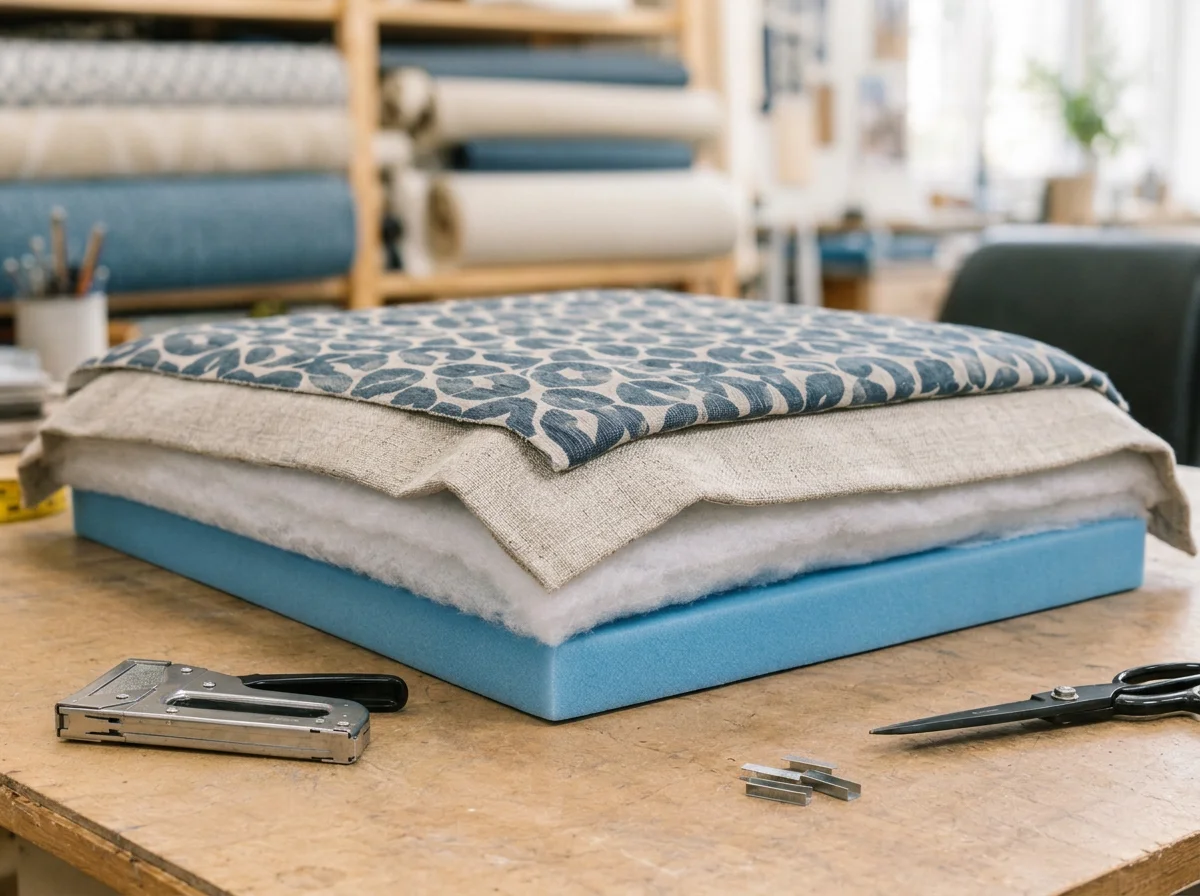
Dining Chair Layers Modern Upholstery
Fire compliance: the legal requirement
In the UK, upholstered furniture is covered by the Furniture and Furnishings (Fire) (Safety) Regulations 1988, as amended. They apply to furniture made since 1950, and to every layer of a piece, not just the fabric you see. Furniture made before 1950 falls outside them, so if you are not sure of a piece’s age, tell us and we can talk it through.
Compliance comes at different levels, depending on where a piece will be used. Contract furniture, for hotels, restaurants and offices, is held to a more demanding level, and automotive, airline and marine use have their own standards.
What it covers
All types of upholstered seating
Children’s furniture, including nursery furniture and upholstered items designed to contain a baby or small child - this includes cot bumpers.
Footstools; sofa beds, ottomans, futons and other convertibles
Bean bags; floor cushions; domestic upholstered furniture for self-assembly
Upholstered headboards, footboards and side rails of beds
Furniture for use in the open air (garden and outdoor furniture) that is suitable for use in a dwelling (homes and caravans), upholstery in caravans (although not vehicles or boats) and cane furniture that includes upholstery
Divans, bed bases, mattresses, pillows and mattress pads (toppers)
Scatter cushions and seat pads, box cushions.
Permanent, loose and stretch covers for furniture, including covers for non-visible parts of furniture
Foam and non-foam filling material for furniture
Used furniture must meet the same stringent standards as new furniture
How a piece complies
Three layers have to work together.
The cover. It is tested against a smouldering cigarette and a small flame like a match. A cover that is at least 75% natural fibre by weight, such as cotton, linen, wool or silk, needs no chemical treatment for the match test, provided it passes the cigarette test and is used over a flame-resistant barrier cloth. Other covers generally have to pass the match test themselves, through the fibre, a back coating or a barrier cloth.
The filling. Foam is combustion modified and should be marked as such. Loose and natural fillings must also meet the standard. This is one reason a full reupholstery includes new fillings.
The barrier cloth. A flame-resistant layer between the cover and the filling, which protects the filling if a flame reaches the cover.
A compliant cover does not make a piece safe if the filling is not, and the reverse is also true, so the layers are chosen as a set. Finished furniture carries a permanent label confirming it meets the regulations, and when a piece is reupholstered it is worth asking what has been used.
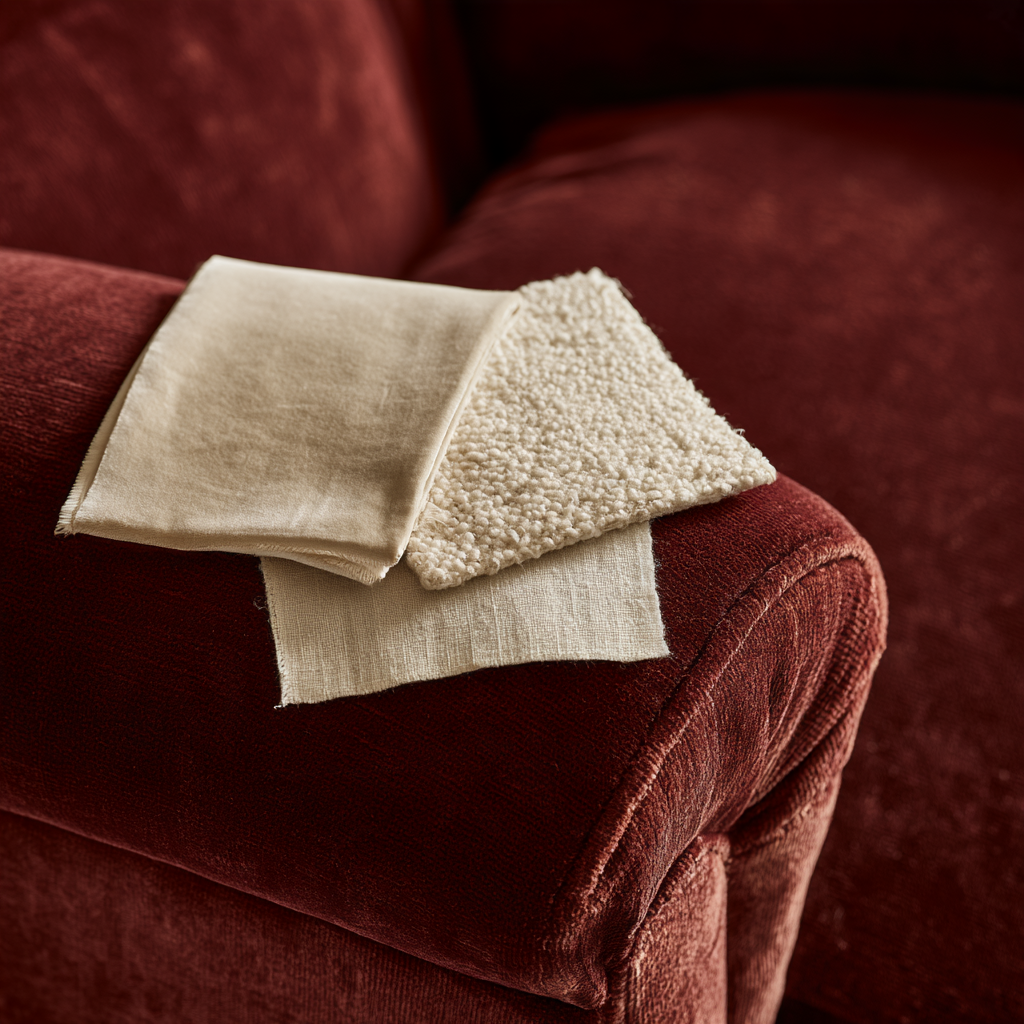
Fabric Swatches
Choosing a fabric
Every fabric we use for upholstery comes with certification showing it meets the fire compliance requirements.
You will often see a fabric described as “suitable for upholstery”. That usually means it is strong enough, but not that it has the relevant fire compliance. A 100% polyester fabric rated at 35,000 rubs is a good example: it is strong, but it needs treating to meet the standards. Compliant upholstery fabric starts at around £35 per metre, against around £20 for curtain fabric, and if a cover needs a barrier cloth, that is an additional material.
Martindale: the strength test
Martindale is the UK test for how well a fabric resists rubbing. A sample is rubbed against a standard abrasive, and the machine counts the rubs until the fabric breaks down. For a woven fabric, that means three threads completely broken (BS EN 14465). A higher number means a stronger fabric, and results come in multiples of 5,000.
BS 2543 groups the results into five levels. These are the minimums for a flat woven fabric:
Light domestic, 15,000 rubs: occasional chairs and decorative pieces
General domestic, 20,000 rubs: everyday use in a home
Heavy domestic, 25,000 rubs: a busy household, such as a family sofa
General contract, 30,000 rubs: regular commercial use
Severe contract, 40,000 rubs: heavy public seating, such as hotels and restaurants
A rating well above what a piece needs does no harm, but it is not a reason in itself to choose a fabric. American data sheets often quote a different test, called Wyzenbeek, and the figures cannot be converted into Martindale, so check which test produced a number, and ask us if you are unsure.
What else affects how a fabric wears
Pilling. Small bobbles on the surface, more common on looser weaves and wool.
Flattening of pile. Velvets can crush where they are sat on most.
Staining and cleaning. Fabrics differ in how easily they come clean, so check the cleaning code.
Fading and colour transfer. Strong sunlight can fade a colour, and some colour can rub off onto clothing.
Snagging. Looped and loosely woven surfaces catch easily, and claws can pull threads.
Seams. A fabric can pull or slip at the seams once it is stretched over a frame.
Padding and construction. A well padded, well made piece protects its cover.
Where the wear falls. Arms, the front edge of a seat and the top of a back take the most.
This is why we like clients to see and handle a fabric in their own room, rather than choosing from a data sheet alone.
How we help you choose
We work with nearly 70 fabric companies. At your first enquiry we check stock with the manufacturer itself, because in our experience many websites show a fabric as in stock when the manufacturer has none, and it is far better to find that out before you have set your heart on it. We can also hold fabric with suppliers. At the complimentary one-hour home visit we bring samples, and we can then send more for you to see in your own light.
If you would like to talk through fabrics for a chair, sofa or headboard, we would be glad to help.
